
7 Landscape Design Principles
Every landscape has a story waiting to be discovered.
By Kelly Mawston
Introduction
Before the first path is laid, the first tree is planted, or the first sketch appears on paper, every site already possesses its own unique character.
The way sunlight moves across the land, the direction of the prevailing wind, the contours beneath your feet, and the views that naturally draw your attention all provide subtle clues about how a landscape wants to be experienced. Great landscape design begins by listening to those clues.
One of the most common misconceptions is that landscape design starts with choosing plants. While planting plays an important role, it is only one part of a much larger process. A successful landscape is created through thoughtful planning, where every decision—from circulation and outdoor living spaces to planting, materials, and views—works together to create a place that feels balanced, functional, and connected to its surroundings.
Whether you're transforming a small urban courtyard, redesigning a family garden, or planning a larger rural property, the same design principles apply. A well-designed landscape should not only look beautiful on the day it is completed, but also continue to grow in character, maturity, and meaning for many years to come. It should respond to the way you live, encourage you to spend more time outdoors, and foster a stronger connection with the natural world.
At By Nature Studio, I believe the most enduring landscapes are inspired by nature rather than trends. Nature provides countless lessons in composition, rhythm, resilience, and seasonal change. By observing these patterns and understanding the unique qualities of each site, we can create gardens that feel timeless rather than temporary.
In this article, I'll share seven fundamental landscape design principles that I return to in every project. Whether you're planning your own garden or considering working with a landscape designer, these ideas will help you see your outdoor space through a different lens—and understand why thoughtful design is the foundation of every memorable landscape.
Step 1. Every Great Landscape Begins with Observation
One of the first things I do when visiting a property is simply stop and observe.
Before making notes or sketching ideas, I take time to understand the site. Every landscape has its own unique conditions, and these often reveal themselves long before any design decisions are made. The direction of the sunlight, prevailing winds, existing vegetation, changes in level, soil conditions, surrounding views, and even the way people naturally move through a space all provide valuable information.
Many homeowners begin by asking: "What should I plant?"
A landscape designer begins with a different question: "What is this site already telling me?"
Nature has spent years shaping the land before we arrive. Rather than working against those natural processes, thoughtful landscape design seeks to work with them. A sunny corner may become the perfect outdoor dining area, while a sheltered space beneath existing trees might naturally evolve into a quiet retreat. Likewise, areas that remain wet during winter may be better suited to moisture-loving planting than lawns that constantly struggle to survive.
Observation is not simply about identifying problems; it is about recognising opportunities. The most successful landscapes often emerge from embracing the unique qualities of a site rather than trying to force it to become something it is not.
When we begin by listening to the landscape, every decision that follows becomes more meaningful.
Step 2. Design Around Lifestyle, Not Just Appearance
Beautiful gardens should do more than impress visitors—they should enrich everyday life.
One of the biggest misconceptions about landscape design is that it is primarily about aesthetics. While visual beauty is certainly important, a successful landscape is ultimately measured by how well it supports the people who use it.
Before I begin developing a design, I like to understand how my clients want to live within their garden.
Questions I often ask include:
How do you spend time outdoors?
Do you enjoy entertaining family and friends?
Where do you drink your morning coffee?
Do children or pets need space to play?
Would you like to grow your own fruit or vegetables?
How much time do you realistically want to spend maintaining the garden?
These conversations often reveal priorities that shape the entire design.
A family who loves entertaining may benefit from generous outdoor dining spaces connected seamlessly to the home. Someone seeking peace and restoration may be better suited to secluded seating areas surrounded by layered planting and gentle movement. Others may place greater value on productive gardens, wildlife habitat, or low-maintenance planting that allows more time simply to enjoy the space.
The most memorable landscapes are deeply personal because they reflect the lives of the people who inhabit them.
Rather than designing for photographs alone, great landscape design creates places where memories are made.
Step 3. Think in Outdoor Rooms
One of the simplest ways to transform a garden is to stop thinking of it as one large space.
Instead, imagine it as a series of connected outdoor rooms, each with its own purpose, atmosphere, and relationship to the rest of the landscape.
Inside our homes, every room serves a different function. We naturally understand the difference between a kitchen, a dining room, a bedroom, and a living room. The same principle can be applied outdoors.
Quiet spaces for reflection.
Naturalistic planting that supports birds and pollinators.
Practical utility areas screened from view.
A thoughtfully designed landscape may include:
A welcoming entrance.
An outdoor dining terrace.
A private courtyard.
A productive kitchen garden.
Open lawn for recreation.
These spaces do not need walls to define them. Changes in paving, planting, level, materials, or even the placement of a single feature tree can subtly signal movement from one outdoor room to the next.
This layering of spaces creates a sense of discovery as people move through the landscape. Rather than revealing everything at once, the garden unfolds gradually, inviting exploration and encouraging people to spend more time outdoors.
Some of the most successful gardens are not necessarily the largest. They simply make better use of space by carefully considering how each area contributes to the overall experience.
A well-designed landscape tells a story through movement, revealing new perspectives and moments of interest with every step.
Step 4. Build the Structure Before You Plant
When people imagine a garden, they often picture flowers, shrubs, and trees. Yet some of the most successful landscapes are memorable long before the planting reaches maturity.
The reason is simple: strong landscapes are built upon a strong framework.
In landscape design, we often refer to this as the structure of the garden. It includes the permanent elements that shape how a space is experienced—paths that guide movement, terraces that create places to gather, retaining walls that respond to changes in level, pergolas that frame views, and carefully positioned trees that provide scale, shelter, and identity.
Planting gives a landscape life, colour, and seasonal change, but structure provides order. Even in the middle of winter, when many plants are dormant, a well-designed garden should still feel balanced and inviting because its underlying framework remains intact.
This is why landscape designers rarely begin with plant lists. Instead, we ask questions such as:
How will people move through the space?
Where should views be framed or revealed?
How can different areas connect naturally?
Where will shade be needed in ten years' time?
Which elements will still define the landscape decades from now?
When the structure is resolved first, every planting decision becomes easier because it is responding to an already coherent design.
When the structure is resolved first, every planting decision becomes easier because it responds to an already coherent design. Think of structure as the skeleton of the landscape. Plants become the living layers that soften, enrich, and continually transform it over time.
Step 5. Plant Like Nature, Not Like a Catalogue
One of the greatest teachers of landscape design is nature itself.
Walk through a native forest, along a coastal dune, or beside a wetland, and you'll notice that plants rarely exist in isolation. They form communities, each species supporting and responding to the others around it. Heights vary, textures overlap, and light filters through multiple layers to create depth and complexity.
Professional planting design draws inspiration from these natural systems.
Rather than viewing plants as individual specimens, I prefer to think about how they relate to one another.
Tall trees create shelter and establish the canopy. Smaller trees and shrubs provide structure beneath them. Perennials, grasses, and groundcovers weave through the landscape, softening edges and creating seasonal movement.
This layered approach offers many benefits beyond aesthetics. It supports biodiversity, suppresses weeds, protects soil moisture, and creates habitats for birds and beneficial insects. The result is a landscape that feels healthier, more resilient, and increasingly beautiful as it matures.
Plant selection should also respond to the conditions of the site. Choosing species that naturally suit the available sunlight, soil type, drainage, and climate almost always produces stronger, lower-maintenance gardens than trying to force unsuitable plants to thrive.
Nature has already demonstrated what works. By observing those patterns, we can create gardens that feel authentic, balanced, and deeply connected to their surroundings.
Step 6. Design for Every Season
Some gardens are spectacular for only a few weeks each year.
Others continue to reveal new qualities with every changing season
One of the most rewarding aspects of landscape design is creating gardens that remain engaging throughout the entire year. This means thinking beyond flowers alone and considering the many ways landscapes communicate through texture, form, movement, light, fragrance, and seasonal transformation.
Spring may bring fresh growth and blossom, while summer encourages outdoor living and abundant planting.
Autumn introduces warm foliage colours and softer light, and winter often reveals the sculptural qualities of trees, grasses, and carefully composed hardscape.
Movement is another element that is often overlooked. Grasses catching the breeze, sunlight filtering through tree canopies, reflections across water, or shadows shifting throughout the day all contribute to the experience of a garden. These subtle changes make landscapes feel alive.
Rather than designing for a single moment, successful landscapes embrace the passing of time.
The garden becomes something that continues to evolve, offering new experiences with each season while remaining grounded in a timeless design.
Step 7. Embrace Simplicity and Leave Space to Breathe
One of the most common mistakes in residential gardens is trying to include everything.
A water feature, fire pit, pergola, raised gardens, dozens of plant species, sculptures, multiple paving materials, decorative edging, feature lighting—the list continues to grow until the landscape begins competing with itself.
Good landscape design is rarely about adding more.
More often, it is about deciding what can be removed.
In visual art, negative space allows important forms to breathe. The same principle applies to landscapes. Open lawn, generous planting beds, simple material palettes, and carefully composed views create moments of calm that allow the eye to rest.
Restraint also creates longevity. Gardens designed around a few strong ideas generally age more gracefully than those attempting to follow every passing trend. They become places that feel timeless because they are rooted in simplicity rather than novelty.
This does not mean landscapes should be empty or minimalist. Rather, every element should have a purpose. When each decision contributes meaningfully to the overall composition, the result feels harmonious rather than cluttered.
Some of the most memorable gardens are not those that contain the greatest number of features, but those that know precisely when enough is enough.
Ultimately, successful landscape design is about creating places where people feel comfortable, connected, and at ease. Sometimes the most powerful design decision is simply allowing the landscape the space to breathe.
Bringing the Principles Together
A Real Project Example
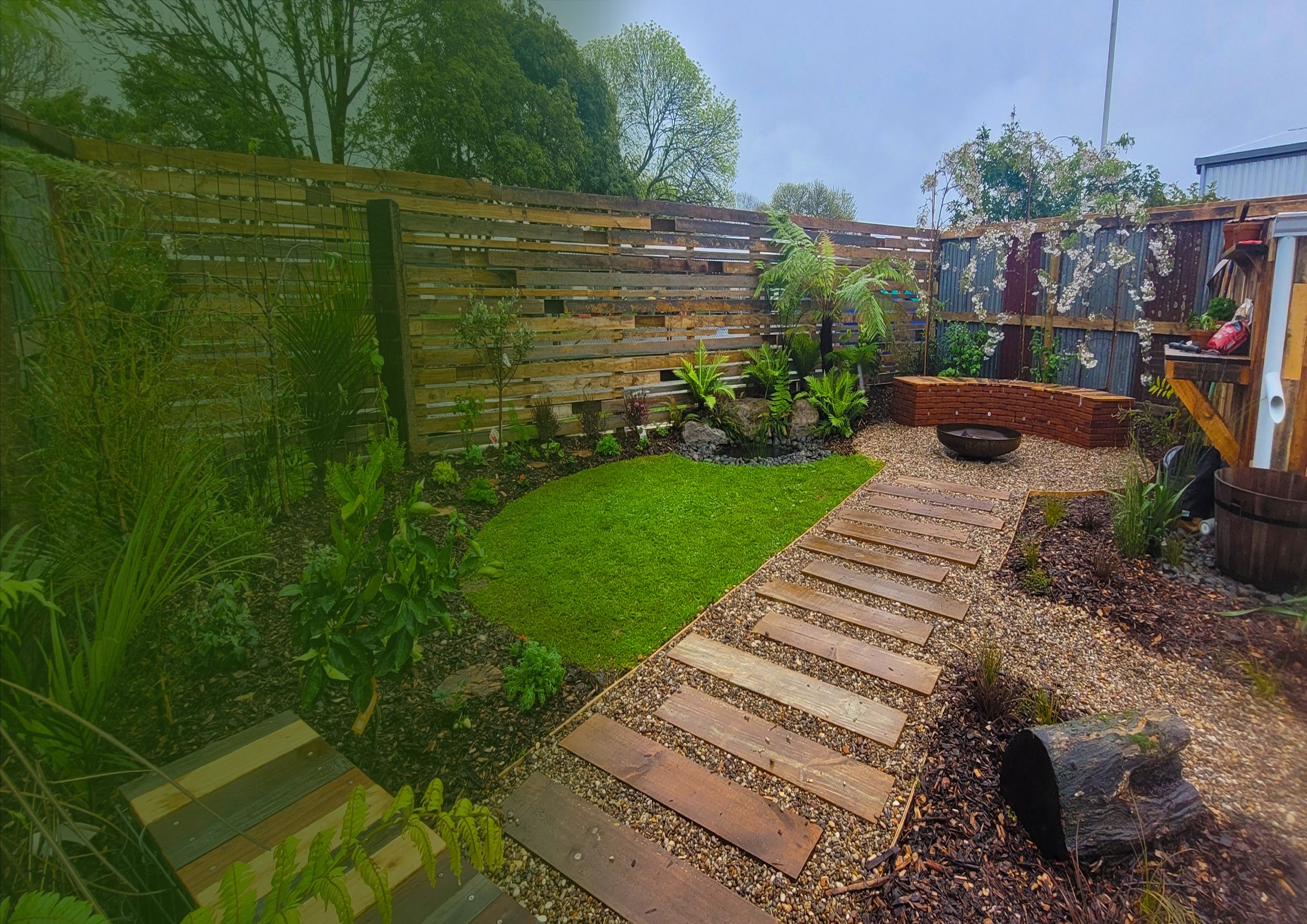
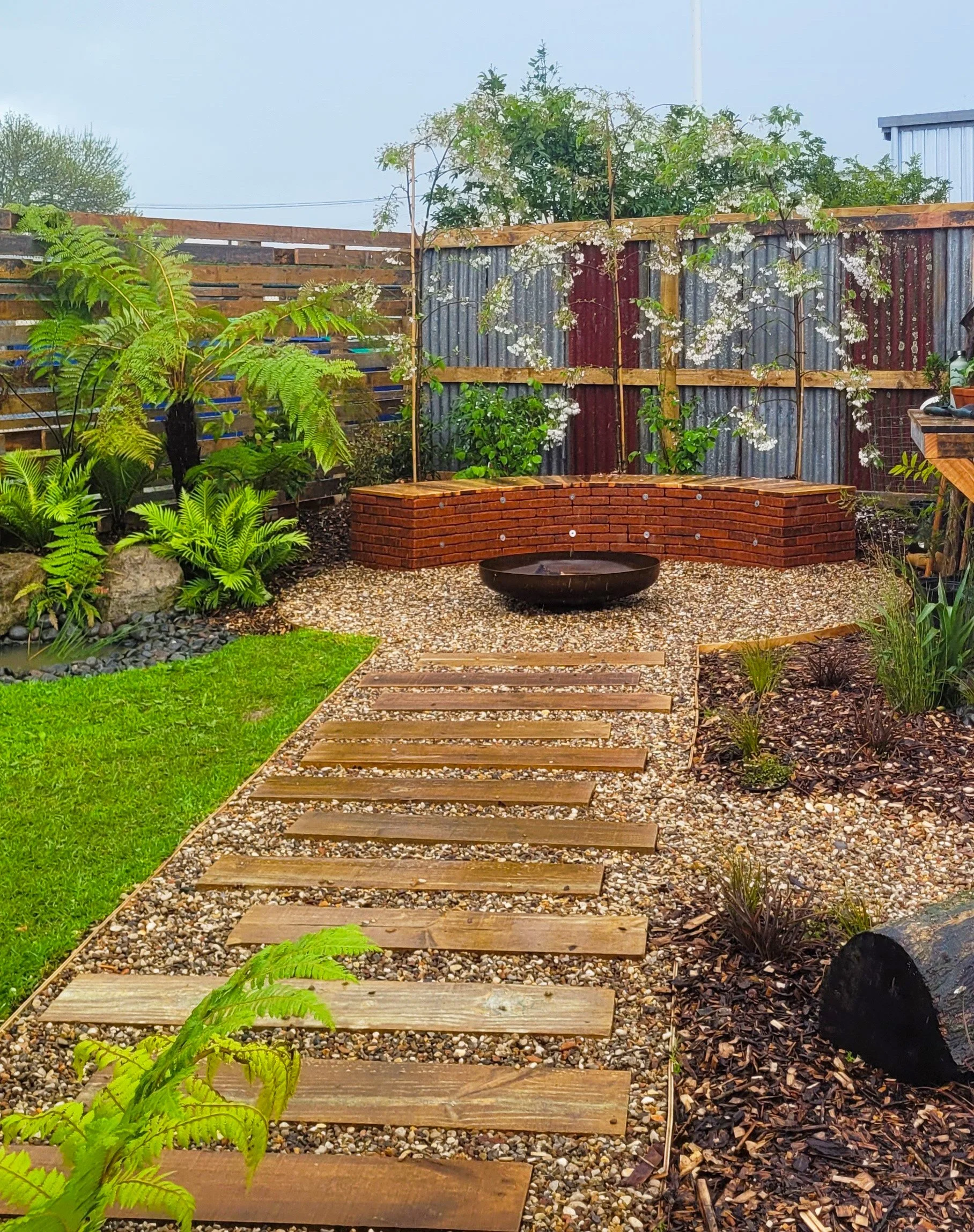
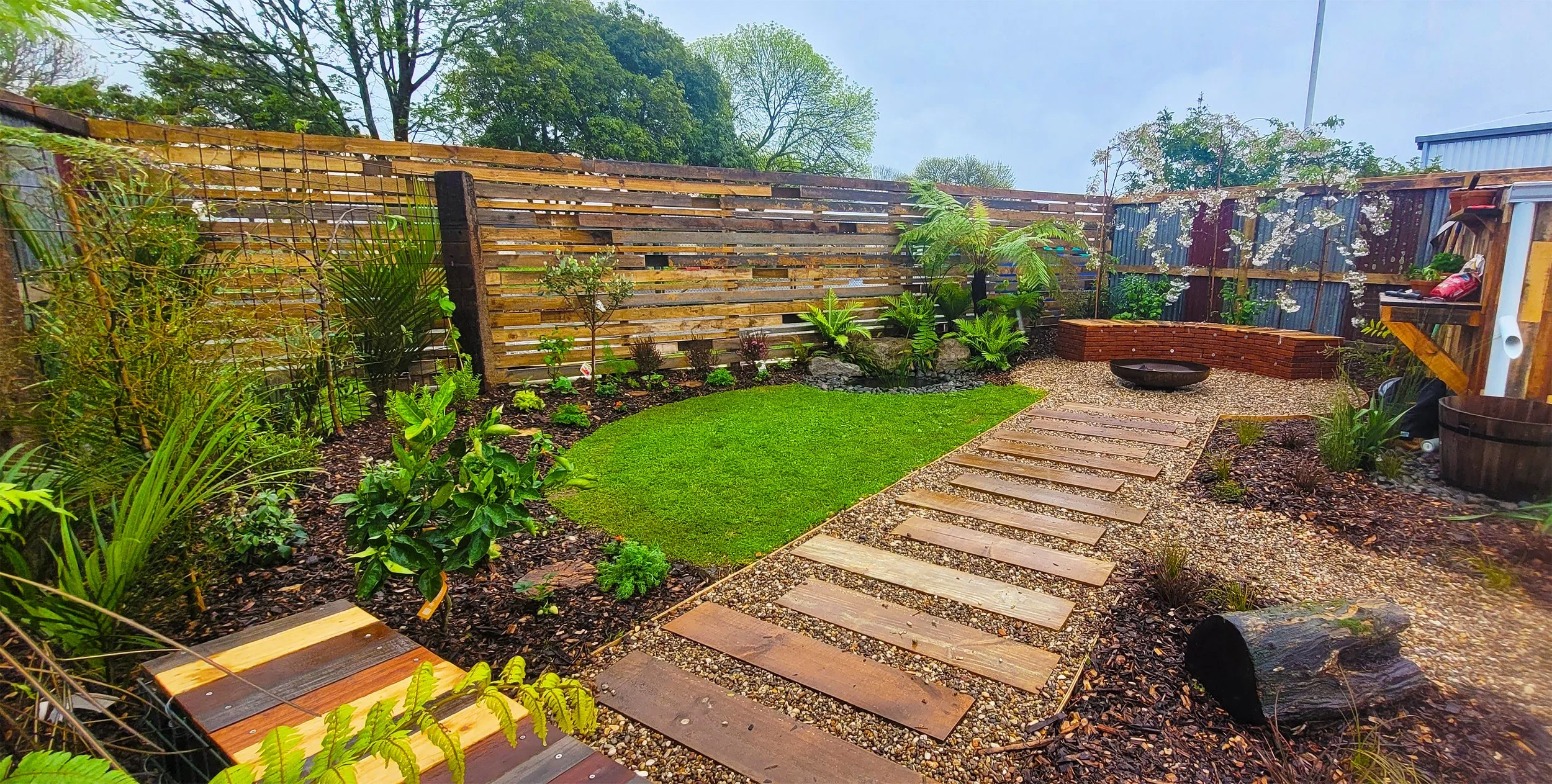
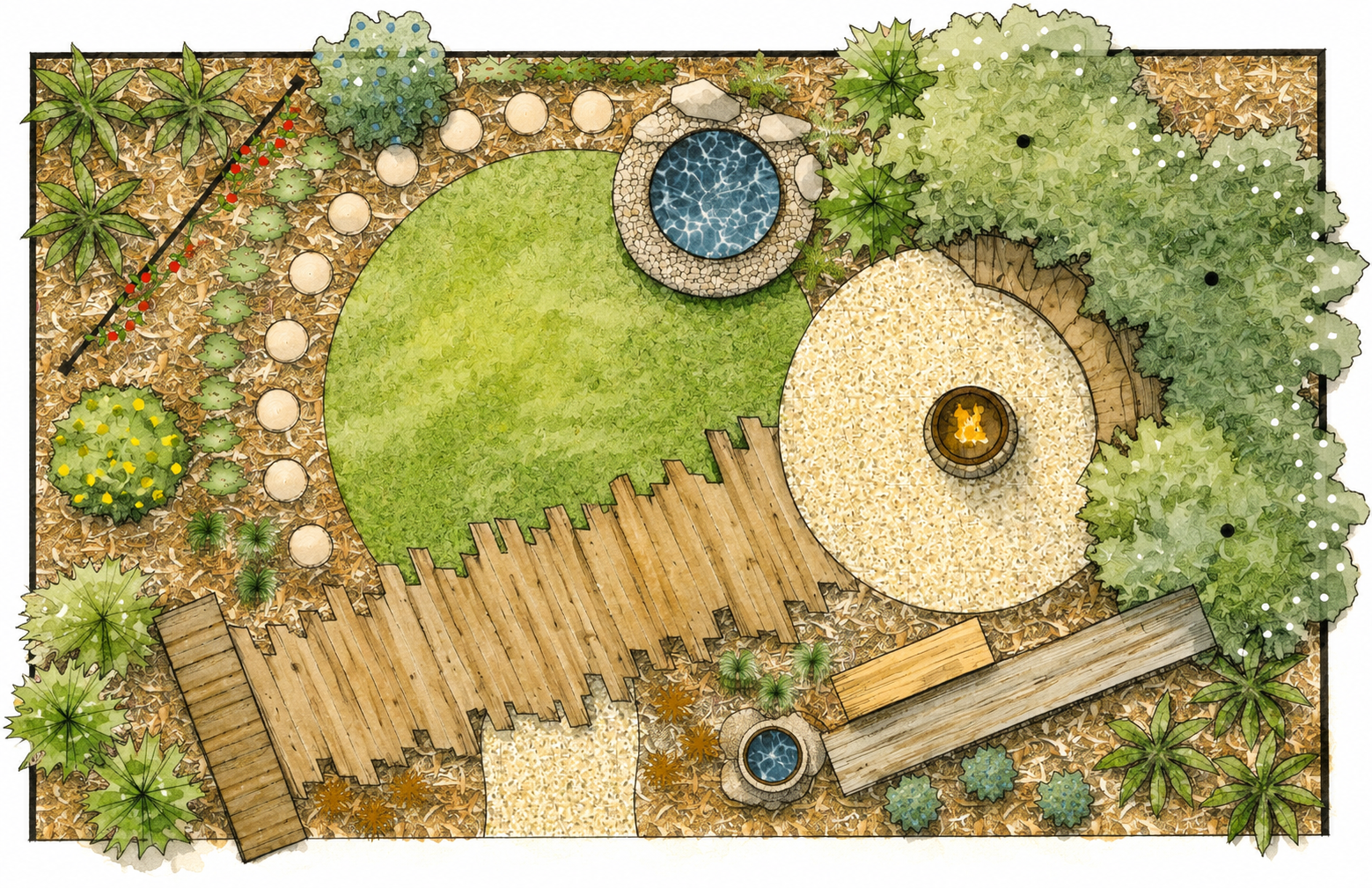
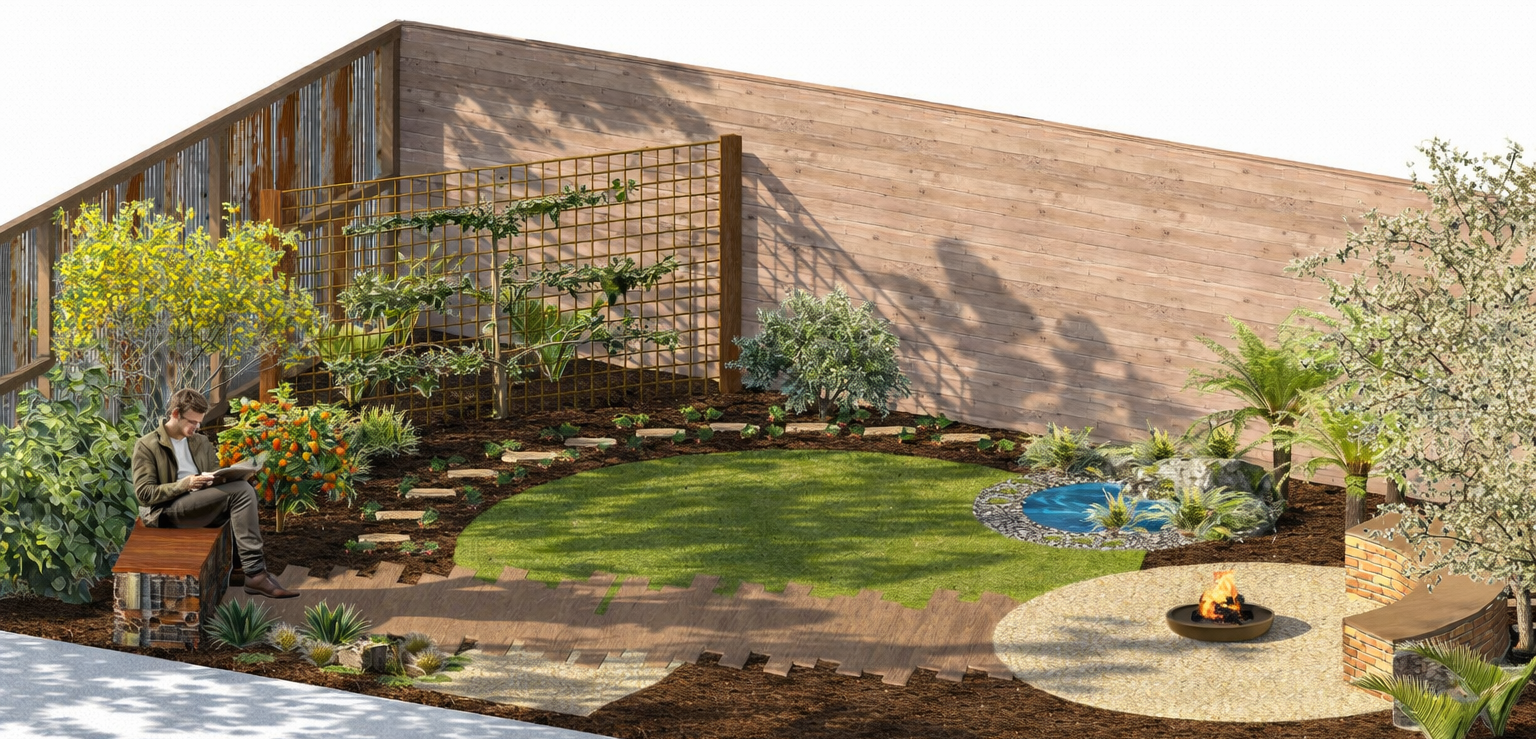
Design principles only prove their value when they work together. The Living Foundation Garden, created for the Waikato Home & Garden Show and awarded Gold for Best Landscape Design, demonstrates how thoughtful planning can transform a compact site into a landscape that feels immersive, generous, and deeply connected to nature.
Although the finished garden appears lush and effortless, its success began long before the first plant was placed. The circulation, outdoor rooms, gathering spaces and structural elements were designed first. Construction followed. The planting came last. Every tree, shrub and perennial had already been considered, but it was the underlying framework that gave the garden its strength. This sequence reflects one of the most important lessons in landscape design: beautiful planting cannot compensate for poor structure, but a strong structure allows planting to flourish for years to come.
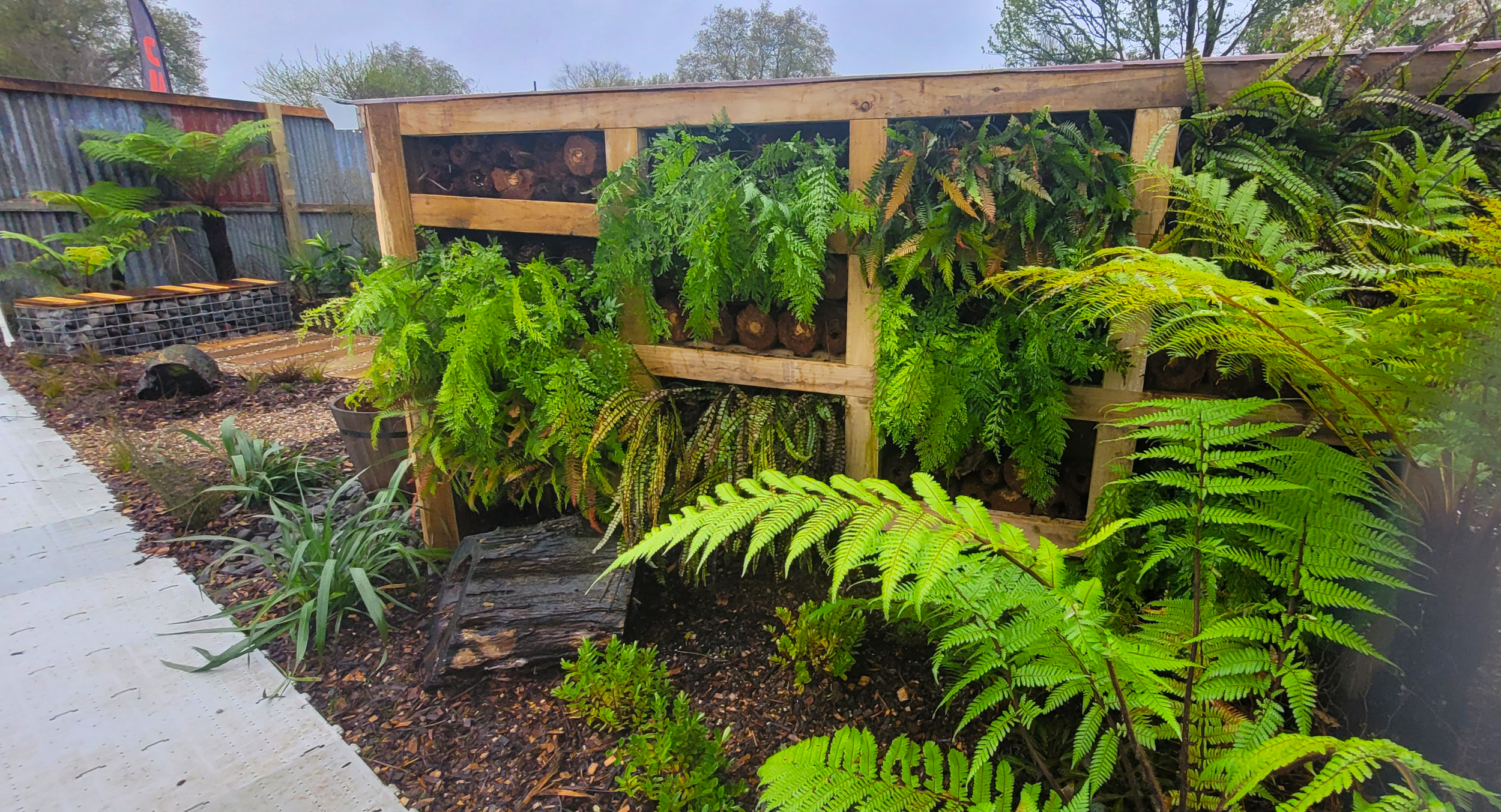
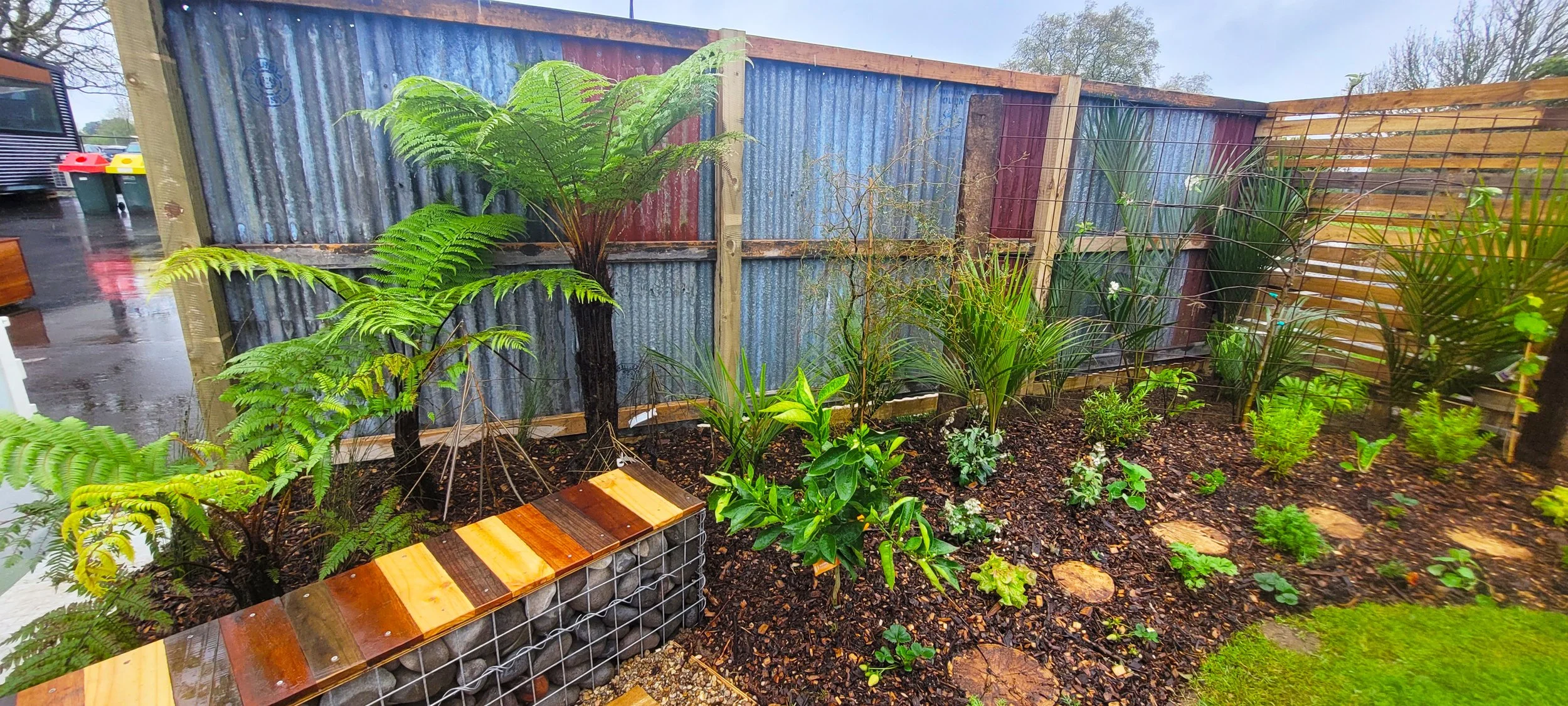
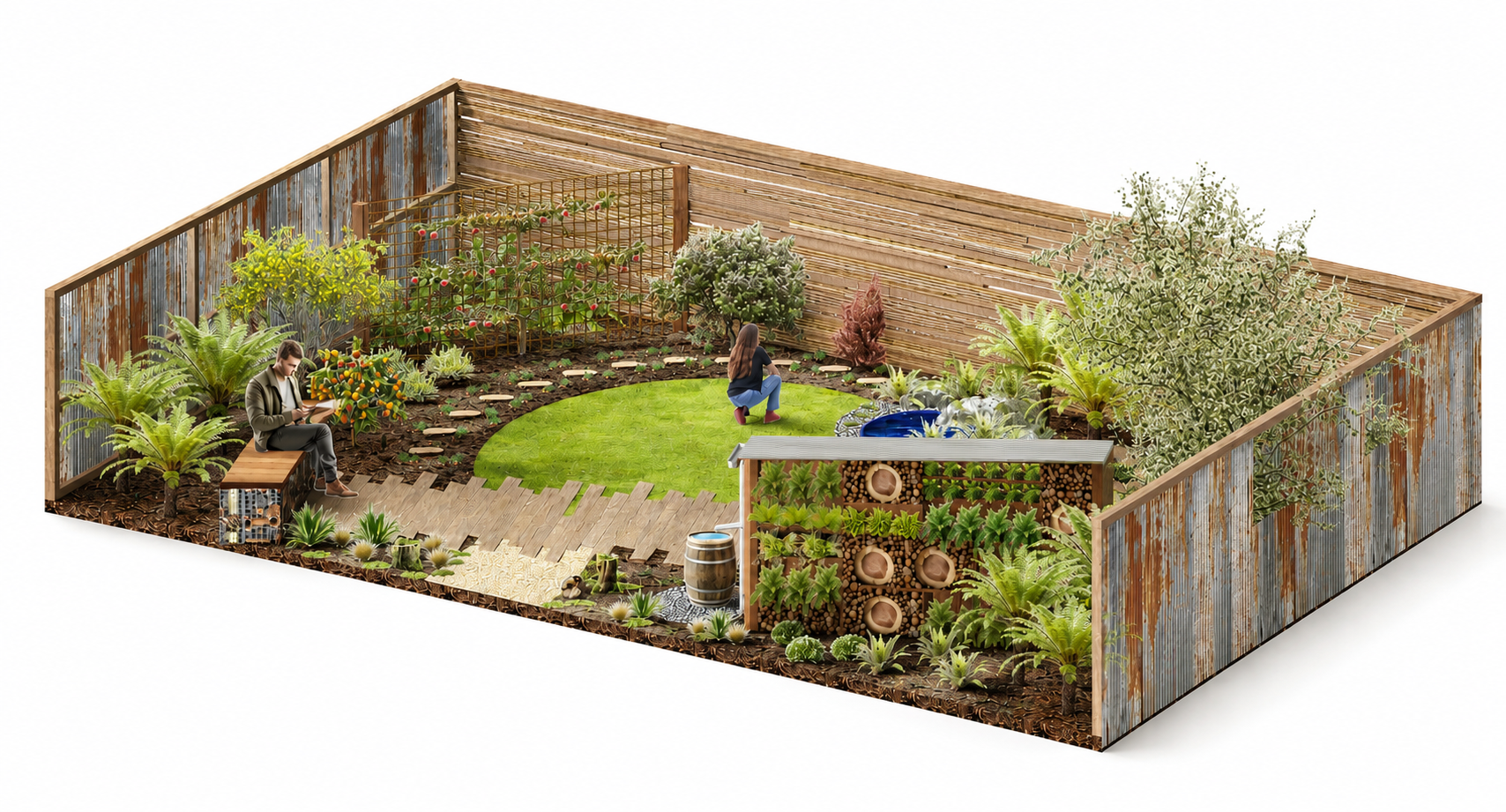
The visitor's experience begins before they even step fully into the garden. A living vertical garden forms the entrance, immediately drawing attention to layers of foliage at eye level. Rather than revealing the entire garden at once, it creates intrigue and gently conceals what lies beyond. This simple gesture transforms the entrance into a threshold between everyday life and a slower, more immersive experience.
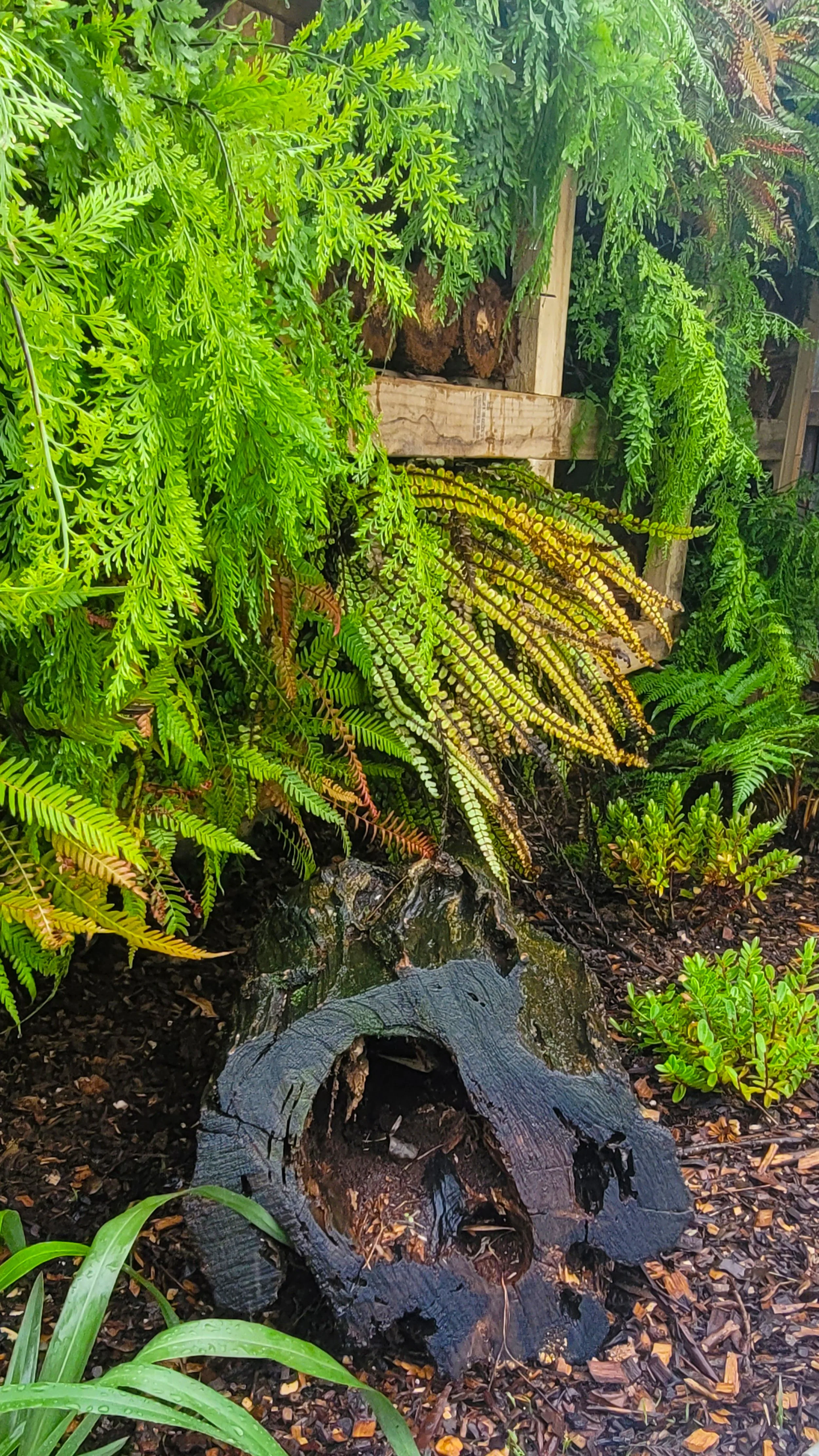
The vertical garden also demonstrates how one design element can perform multiple roles. It incorporates insect hotels that provide habitat for beneficial insects, edible herbs that encourage visitors to harvest and interact with the planting, and acts as a living wall that defines the first outdoor room. Beauty, ecology and function become inseparable.
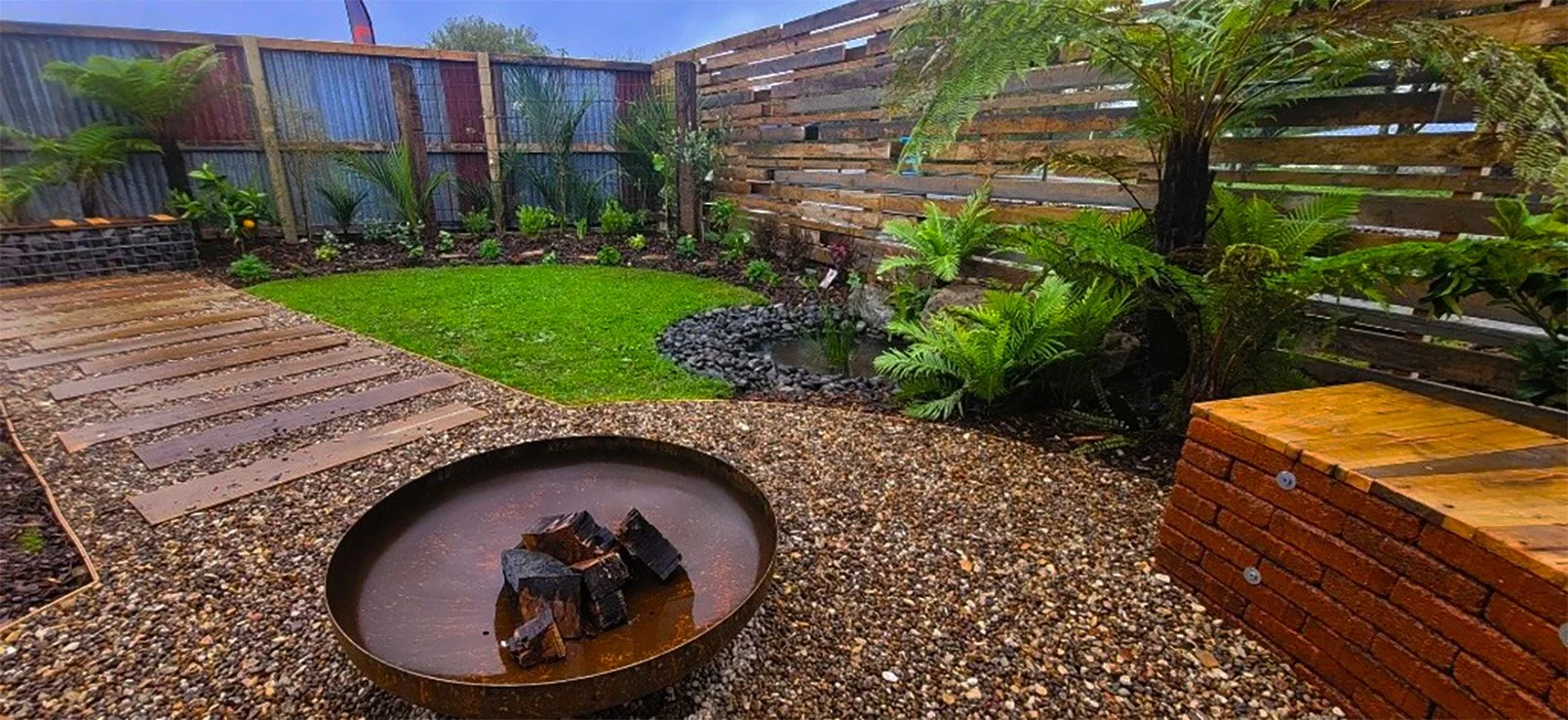
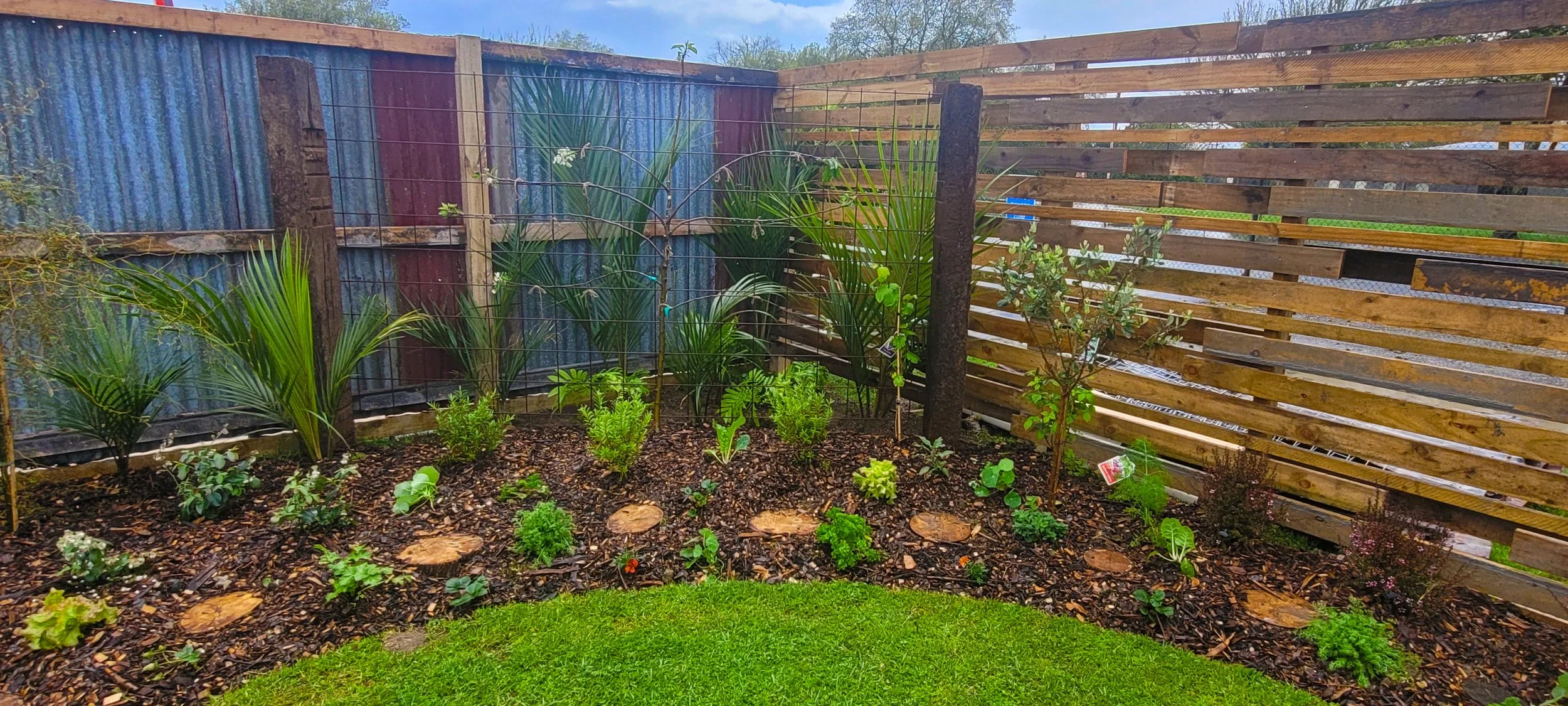
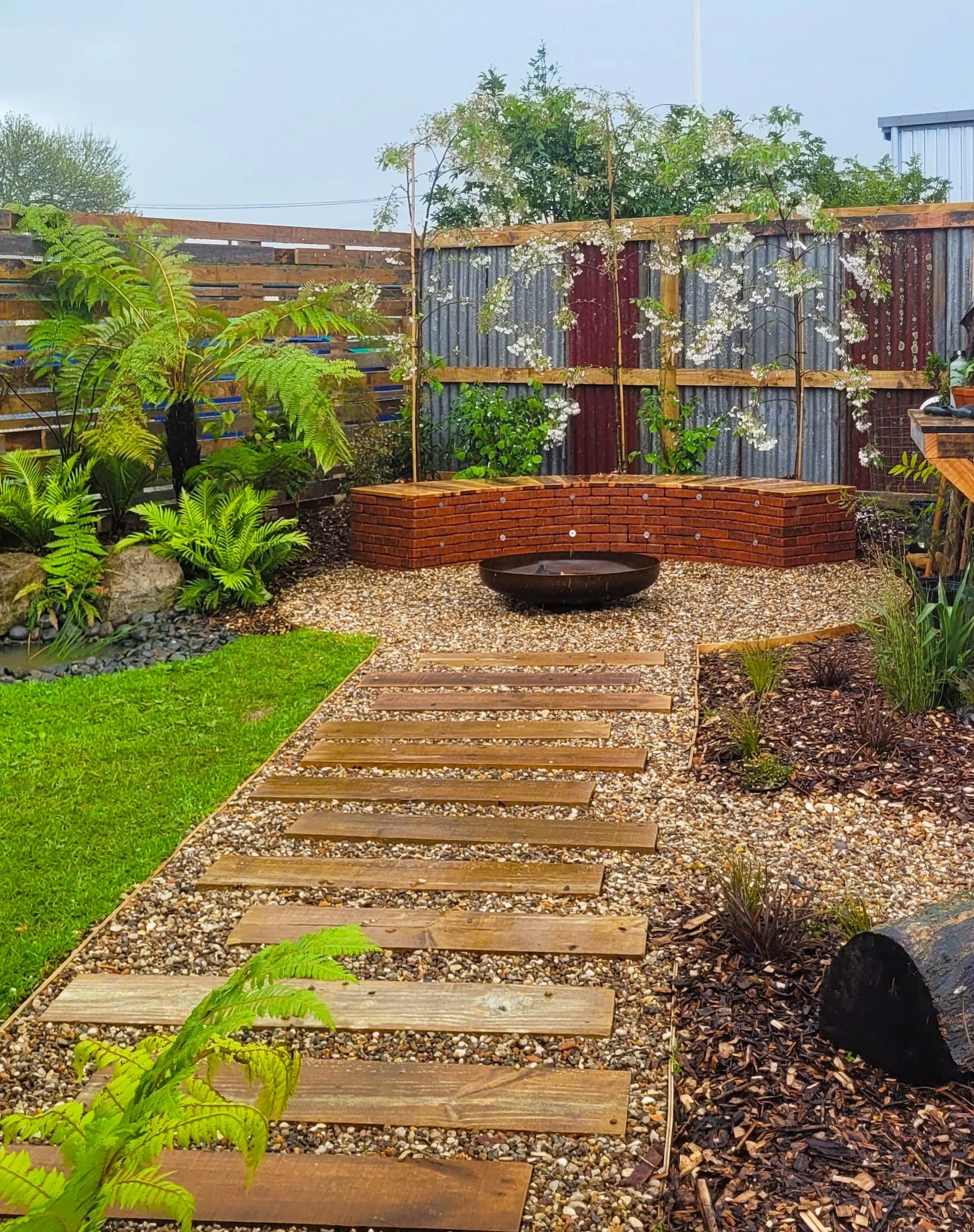
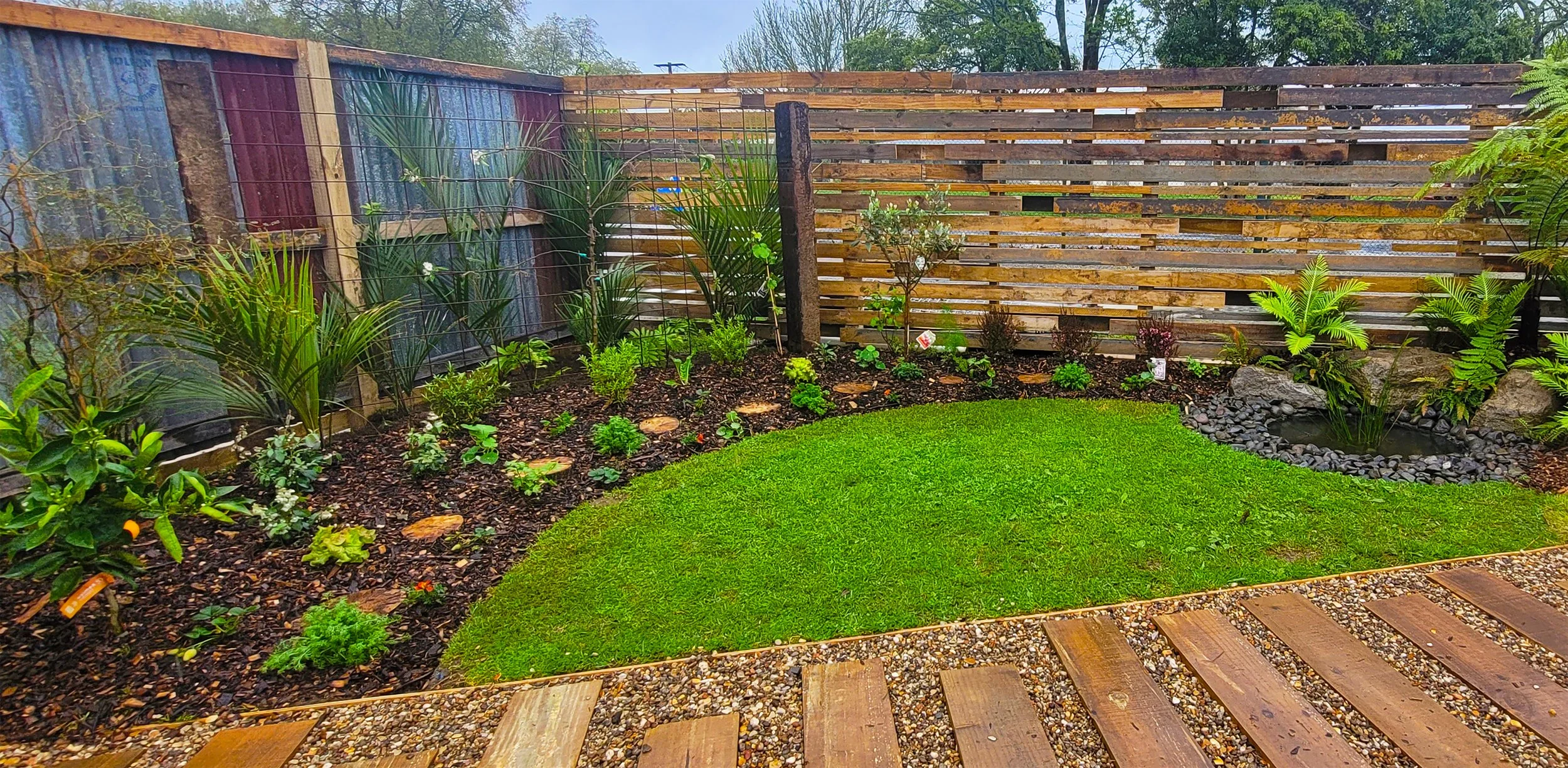
From here, timber stepping stones lead visitors along a gentle diagonal journey through the landscape. Rather than following a straight path or revealing the entire garden from a single viewpoint, the circulation encourages exploration. Each change in direction offers a new perspective, allowing the garden to unfold gradually through a sequence of connected outdoor rooms. Although the site occupies a relatively modest footprint, this carefully choreographed journey creates the impression of a much larger landscape because every destination is discovered rather than immediately revealed.
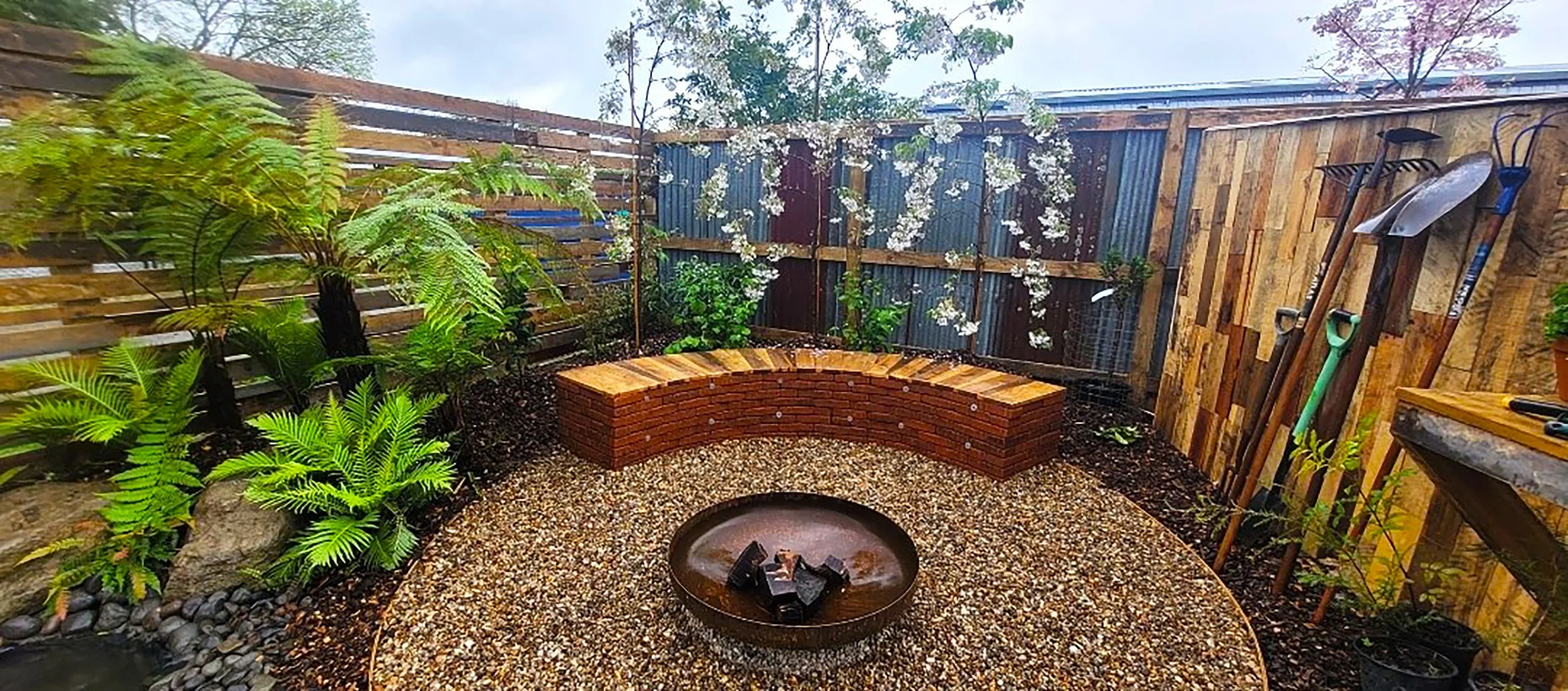
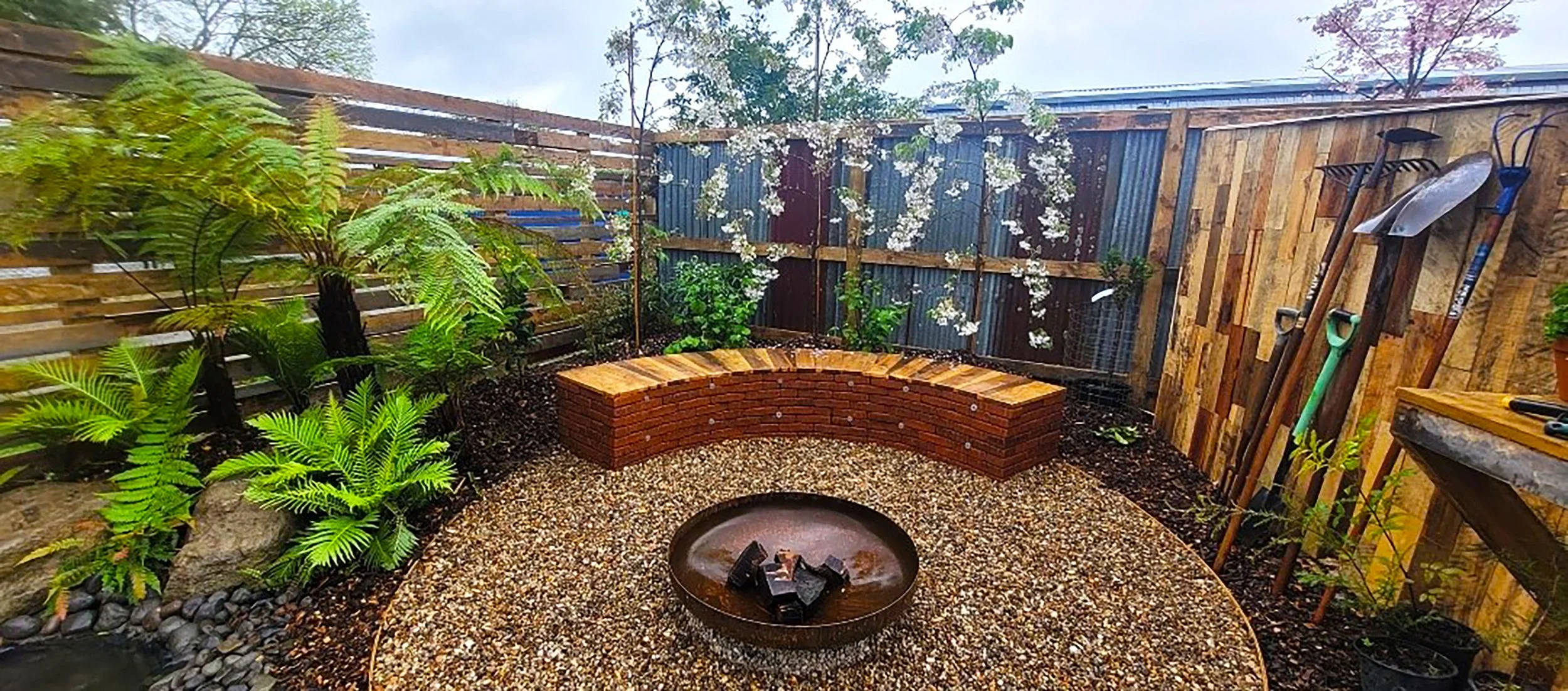
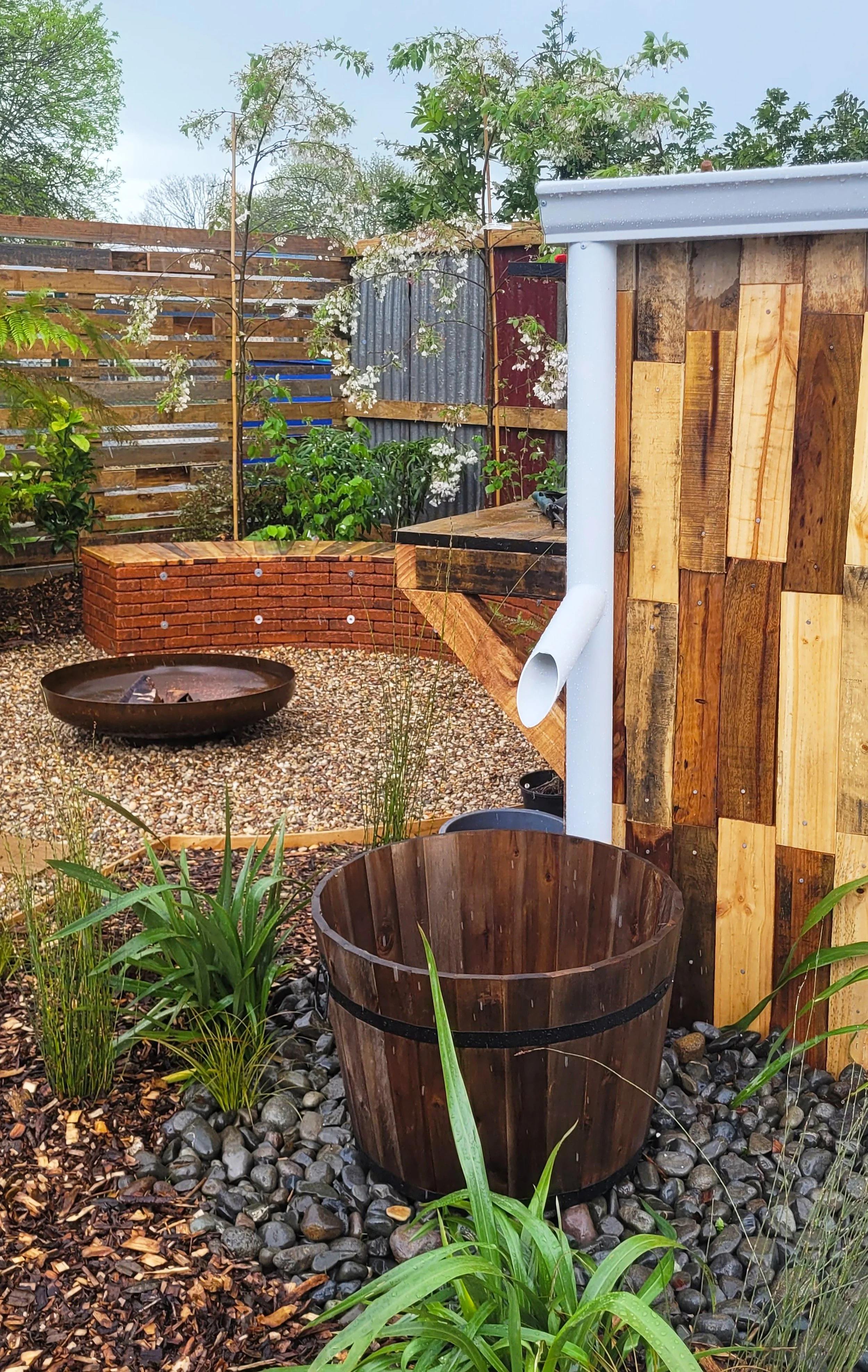
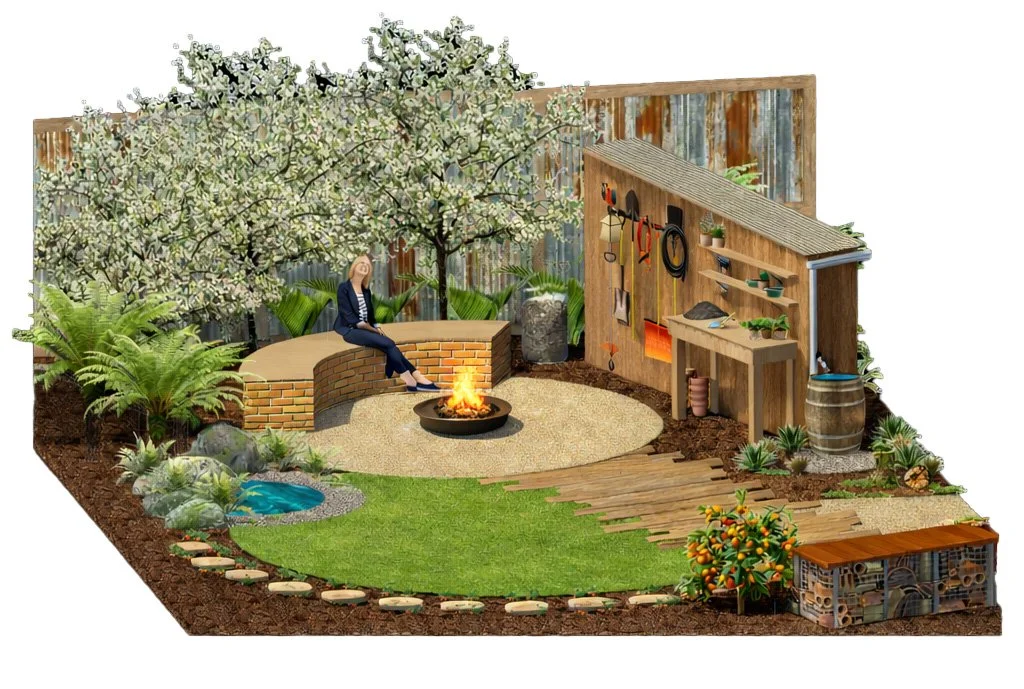
The journey culminates at the healing circle, positioned beyond the living vertical garden at the far end of the site. Framed by layered planting and flowering trees, this space forms the garden's final destination—a place designed for gathering, reflection, and connection around the central fire bowl. By placing the healing circle at the end of the journey rather than in the middle of the garden, visitors experience a genuine sense of arrival and enclosure, reinforcing the restorative intention of the design.
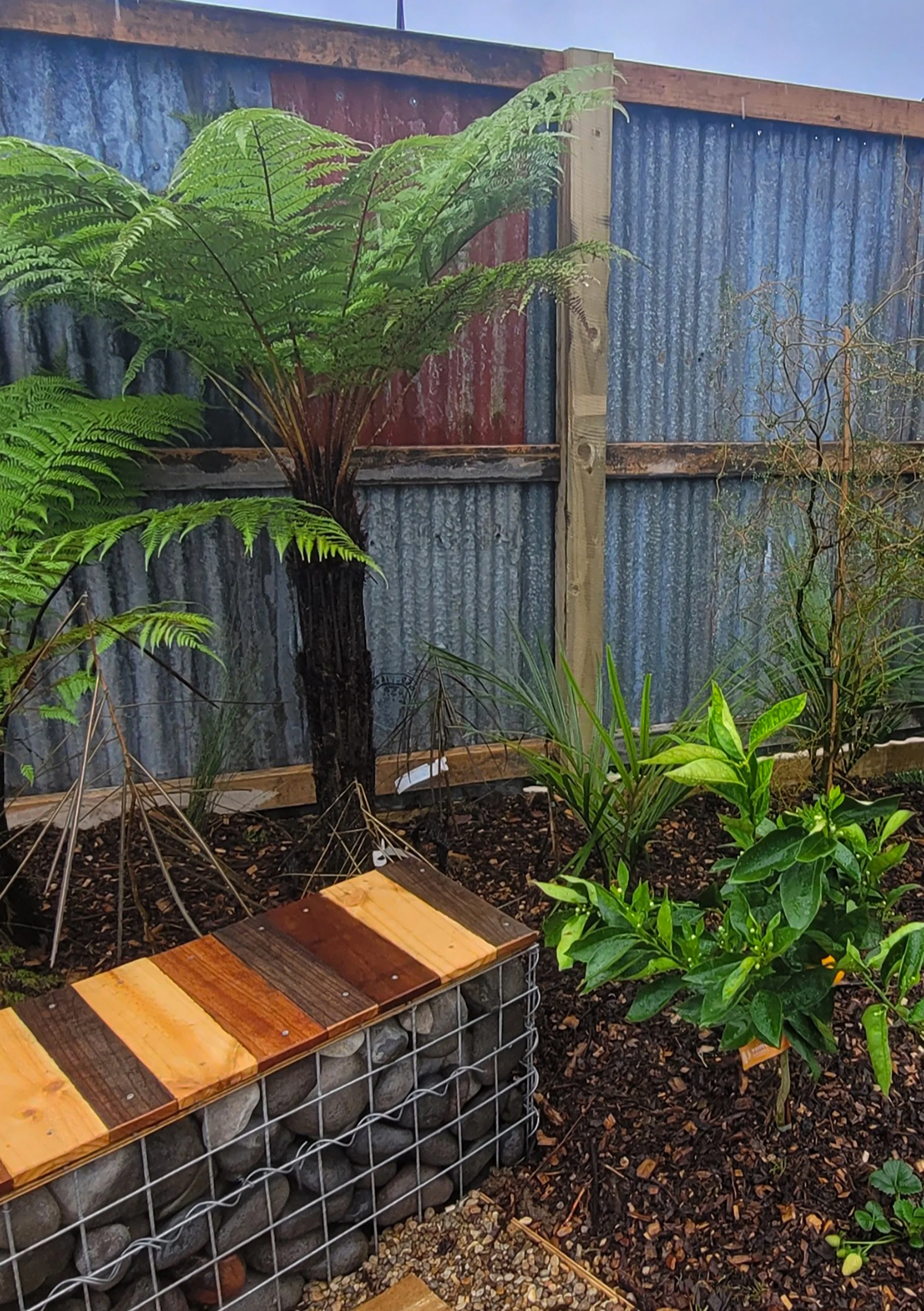
On the opposite side of the garden, positioned diagonally across from the healing circle, a gabion seat offers an entirely different experience. Nestled amongst layered planting, it provides a quiet retreat for one or two people to pause, observe, and become immersed in nature. Together, these two destinations create a subtle balance within the landscape—one encouraging community and conversation, the other solitude and contemplation. This diagonal relationship draws visitors naturally across the site and is one of the key reasons the garden feels far larger than its actual dimensions.
Equally important is what isn't planted. The generous lawn acts as deliberate negative space—a place for the eye to rest amongst the richness of the surrounding planting. Rather than competing with the garden's complexity, this simple green form strengthens it. The open lawn provides visual breathing room, allowing the textures, colours and sculptural qualities of the surrounding plants to become even more pronounced. Like silence in music, carefully considered space gives meaning to everything around it.
Bringing the Principles Together
A Real Project Example
Throughout the garden, planting is organised as living communities rather than collections of individual specimens. New Zealand native plants are woven together with medicinal herbs, edible species and productive fruit trees so that every plant contributes multiple functions within the landscape. Species support one another, respond to changing light conditions and create habitat for insects, birds and people alike. Heights vary, textures overlap, and filtered light creates depth, resilience and seasonal richness.
Seasonal change was considered from the very beginning of the design process. Spring-flowering cherry trees provide moments of spectacle, while espaliered apple trees combine productivity with elegant structure. Lemon and feijoa trees and blueberry bushes continue the theme of edible landscapes, complemented by medicinal herbs and productive planting that encourage continual interaction throughout the year. Rather than planting for appearance alone, every species was selected to contribute to both ecological health and everyday human experience.
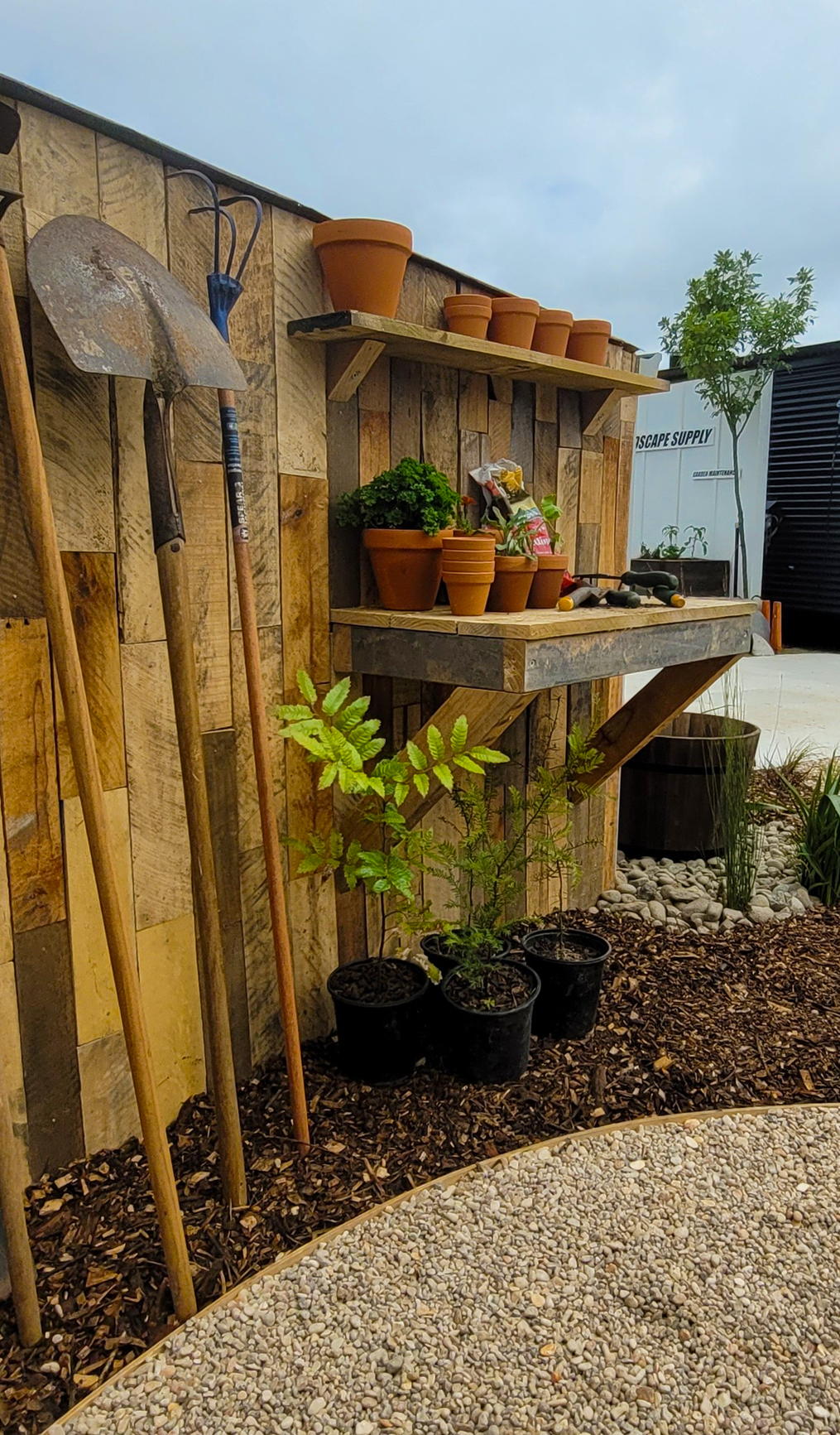
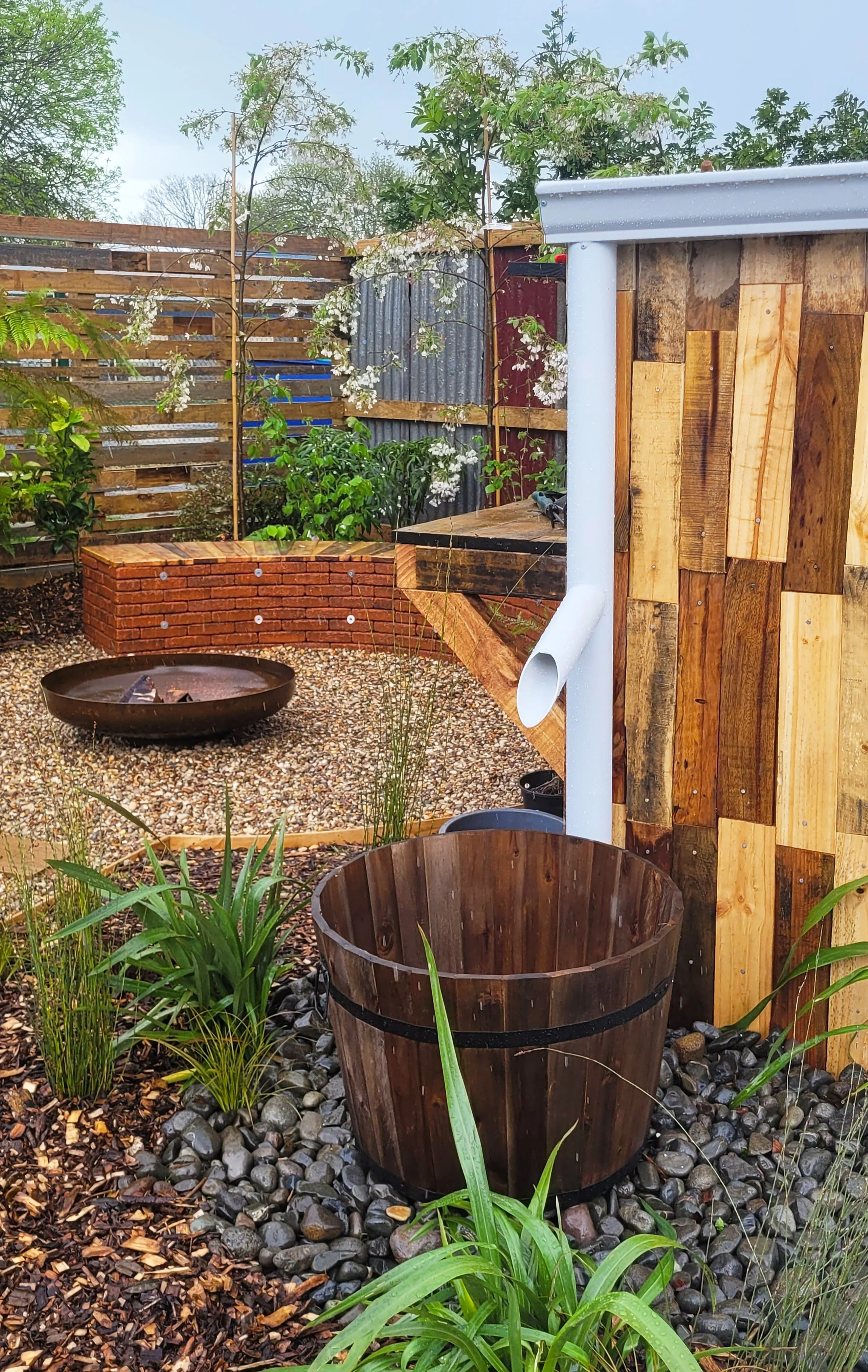
Water quietly connects many of the garden's ideas. A small pond introduces movement, reflection, and habitat for wildlife, increasing biodiversity within the space. Equally significant is the rainwater harvesting system integrated into the roof of the vertical garden and potting bench structure. Rainwater is collected through simple guttering and stored in a recycled wine barrel for reuse throughout the garden.
It is a modest intervention, yet it reflects an important design philosophy: water is life, and resilient landscapes should celebrate, capture and reuse this precious resource wherever possible.
Interaction is woven throughout the garden. The potting bench and tool wall invite gardening rather than passive observation, while edible plantings encourage visitors to taste, harvest and engage directly with the landscape. The garden becomes something to participate in rather than simply something to admire.
Perhaps the greatest lesson from The Living Foundation Garden is that diversity does not create disorder when supported by a clear design framework. The planting is intentionally rich and varied, yet the landscape feels calm because every decision is anchored by strong structure, purposeful circulation, and a clear design intention. The seven principles of good landscape design are not expressed as isolated ideas—they work together as a single living system, each reinforcing the next.
The result is a garden that feels restorative, productive and alive. It demonstrates that regardless of size, landscapes become memorable when thoughtful structure, ecological function and human experience are designed together. Plants may be the most visible part of a garden, but it is the invisible framework of good design that allows them—and the people who experience them—to truly flourish.
The Living Foundation Garden reminds us that exceptional landscapes are not created by adding more plants—they are created by giving every element, every space, and every living thing a clear purpose within the whole.
Frequently Asked Questions
Is professional landscape design worth the investment?
A well-considered landscape design often saves both time and money by providing a clear plan before construction begins. It reduces costly changes during installation, ensures spaces function effectively, and creates a cohesive vision that can be implemented in stages if required.
Can landscape design really be completed online?
Absolutely.
Many residential landscape design projects can be successfully completed using site measurements, photographs, aerial imagery, online consultation, and collaborative communication. This allows By Nature Studio to work with clients throughout New Zealand while delivering the same thoughtful design process traditionally associated with face-to-face consultations.
When should I involve a landscape designer?
The earlier, the better.
Landscape design is most effective when considered before construction or planting begins. Early planning allows decisions about circulation, outdoor living spaces, drainage, planting, lighting, and materials to be integrated into one cohesive design rather than added later as separate elements.
How long does the design process take?
Every project is unique and depends on its size and complexity. Smaller concept designs may be completed within a few weeks, while larger master planning projects naturally require additional time to refine every aspect of the design. The emphasis is always on creating a thoughtful, carefully considered outcome rather than rushing the process.
Do I need to implement everything at once?
Not at all.
Many clients choose to complete their landscapes in stages over several months or years. A comprehensive master plan provides the confidence that every future addition contributes to the overall vision, allowing the landscape to evolve while maintaining a consistent design language.
What if I don't know exactly what I want?
This is actually one of the most common starting points.
Part of the design process is helping uncover the opportunities within your property while understanding how you want to live outdoors. Through thoughtful conversation, site analysis, and concept development, a clear direction naturally begins to emerge.