
FROM THE STUDIO
ISSUE 02 · OCTOBER 2026
What the Rain Revealed
Sometimes the best time to understand our gardens is when the weather turns
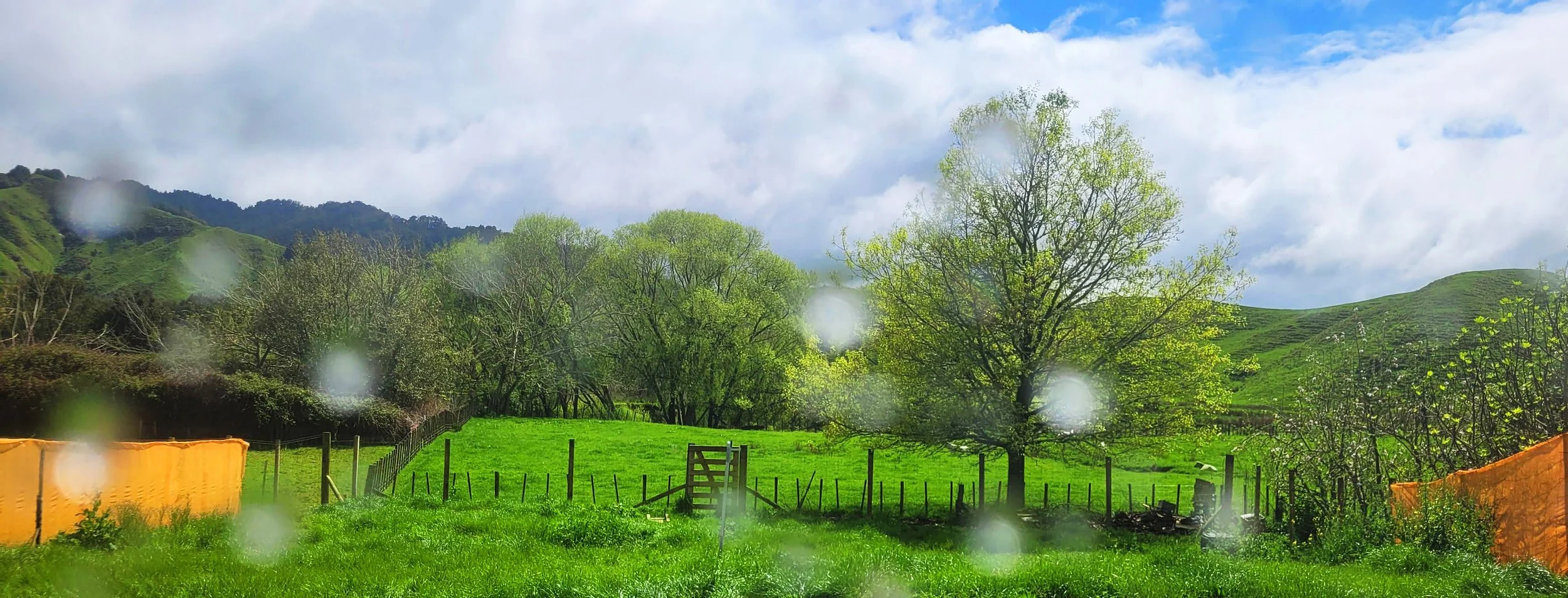
There's something about arriving at a property with fresh eyes. You begin imagining what it could become — where the gardens might go, how the spaces might connect, what could grow and how it might all feel.
But before any of that, there's the land itself. And sometimes it has other things to tell you.
Recently, I spent a particularly wet day at my little property in the rural central North Island. It wasn't exactly ideal gardening weather, but as it turned out, it was a rather good day for landscape design thinking.
When the rain becomes a teacher
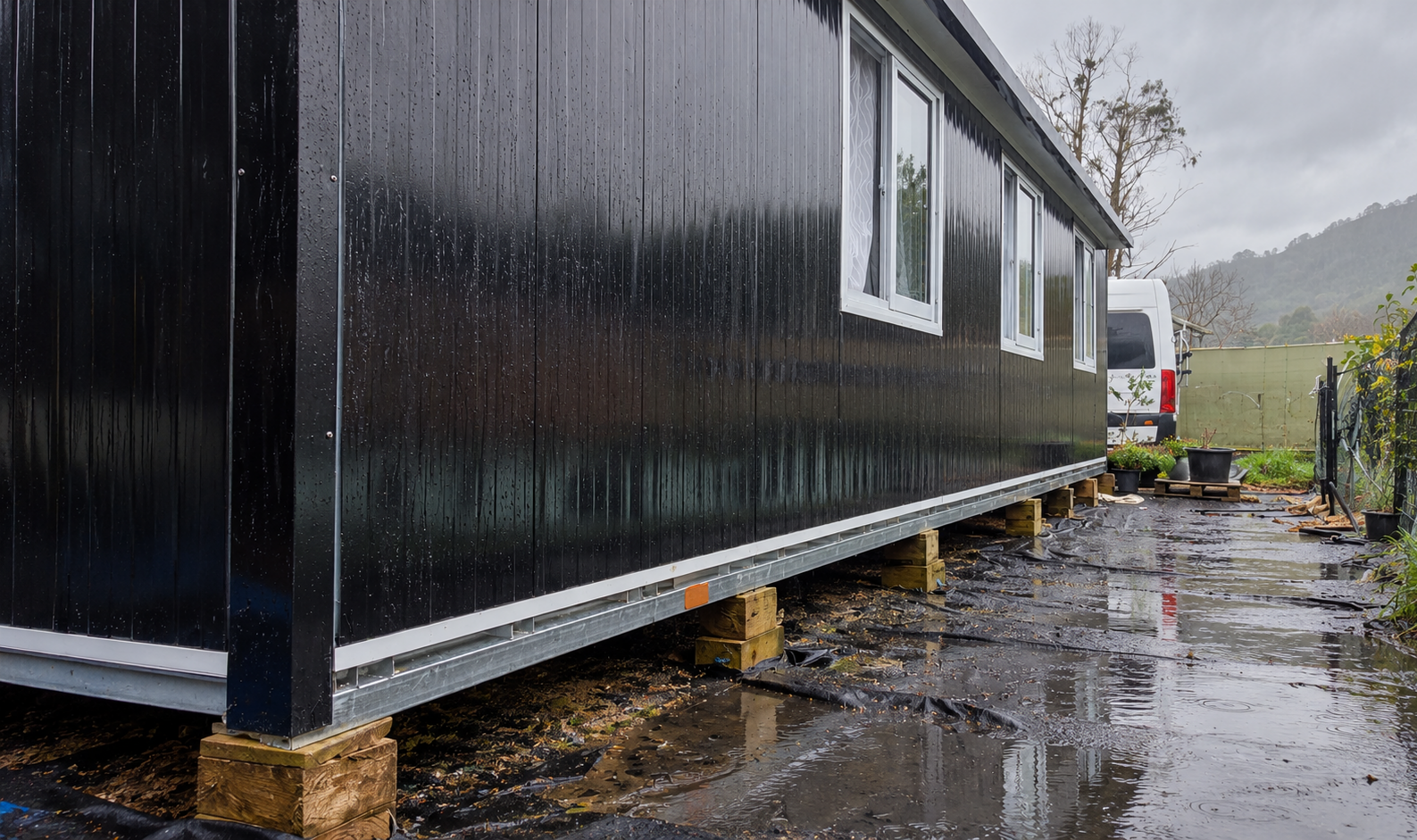
As the rain continued, I began noticing things that weren't nearly as obvious on a dry day.
Water was collecting in certain areas, moving across others, and pooling rather too close to the cabin for comfort.
These weren't necessarily surprises, but seeing them happen in real time gave me a much clearer picture of how the property behaves.
And that is valuable information.
Because water doesn't necessarily follow the paths we imagine it will. It responds to the shape of the land, the soil beneath it, and the surfaces it encounters along the way.
Looking beyond the puddles
It's tempting to see standing water as simply a problem to fix.
But as I walked around the property, I found myself thinking about the possibilities as much as the problems.
Where is this water coming from? Where does it naturally want to go? Could some of it be collected and put to good use?
And importantly, how might these observations influence where I eventually place garden beds, pathways, and outdoor living spaces?
I'm not rushing to answer those questions just yet.
For now, I'm watching, recording, and beginning to understand the patterns.
Designing with the land, not against it
One of the things I love most about landscape design is that every property has its own character.
The way sunlight moves through it, where the wind finds its way in, how the ground holds moisture, and what is already growing there — these are all part of the story.
Good design isn't about imposing an idea onto a piece of land and expecting it to cooperate.
It's about finding that lovely balance between what we want from our gardens and what the site itself can support.
And sometimes that means putting the sketchbook aside, pulling on your gumboots and heading outside in the rain.
A little thought to take into your own garden
Next time you have a decent downpour, take a wander around your property.
Notice where the water travels, where it gathers, and which areas remain surprisingly dry.
You don't need to solve anything immediately. Just be curious.
You might discover something that changes the way you think about your garden.
Observe first. Design second.
Until next time,
Kaia
By Nature Studio